Custom Engagement Solutions
Unlock tailored solutions with a free, no-obligation strategy session.

Expert Developers & Engineers on Demand

Scale Your Team with Skilled IT Professionals

Expert Guidance for Digital Transformation

Many Shopify stores lose visibility and revenue due to crawl inefficiencies, index bloat, performance bottlenecks, and structural SEO gaps. A technical Shopify Website Audit evaluates your store’s architecture, rendering behavior, and search engine signals to identify measurable risks.

Shopify often generates duplicate URLs through collections, filters, tags, and pagination. Without proper canonical tags, robots directives, and URL parameter control, search engines crawl unnecessary pages. A Shopify SEO Audit analyzes crawl paths, index coverage, canonical alignment, and duplicate content clusters to prevent authority dilution.
A flat or disorganized internal linking structure diminishes topical authority and restricts ranking potential for collection and product pages. A Shopify Store Audit maps internal link depth, anchor distribution, breadcrumb structure, and collection hierarchy to improve crawl flow and PageRank distribution.
Third-party apps, unminified scripts, render-blocking CSS, and heavy Liquid logic slow down LCP, increase CLS, and delay TTI. A Shopify Website Audit reviews theme code structure, unused JavaScript, app load behavior, image compression, and server response timing affecting SEO and conversions.
Incorrect Product schema, missing Organization markup, broken breadcrumbs, or inconsistent metadata reduce rich result eligibility. A Shopify SEO Audit validates JSON-LD implementation, schema nesting, Open Graph tags, and metadata consistency across templates.
No guessing. We run a full store review across UX, speed, tracking, and on-page SEO, Then deliver a prioritized action list your team can ship without confusion.
Not every Shopify store is technically stable, even if sales look steady. Hidden crawl errors, structural gaps, and performance weaknesses quietly reduce visibility and conversions. CartCoders delivers precision-led Shopify Website Audit reports built to detect, prioritize, and resolve the technical risks most stores overlook.
Identifies index coverage gaps, canonical conflicts, duplicate URLs, robots.txt misconfigurations, and weak internal linking structures that reduce search performance.
Examines LCP, CLS, INP, JavaScript payload, theme inefficiencies, and third-party app weight affecting both rankings and buyer retention.
Evaluates collection hierarchy, URL depth, breadcrumb logic, and authority flow to strengthen crawl efficiency and topical structure.
Reviews heading hierarchy, metadata integrity, structured data accuracy, variant handling, and template consistency influencing discoverability.
Pinpoints friction in cart behavior, payment flow, shipping logic, and mobile checkout execution that impacts revenue stability.
Analyzes CTA clarity, schema validation, review integration, and buyer assurance signals that affect decision confidence.
Validates GA4 ecommerce tracking, event accuracy, tag conflicts, and attribution clarity to support data-driven decisions.
Tests mobile responsiveness, layout stability, tap spacing, and speed consistency across devices where most traffic originates.

Discuss your store’s technical health directly with our Shopify audit specialist. Get clarity on crawl issues, Core Web Vitals, index stability, and structural SEO risks.
Schedule a Technical Audit CallA serious Shopify Website Audit must quantify risk, measure technical loss, and define corrective priority. CartCoders combines structured audit methodology with AI-assisted analysis using ChatGPT, GitHub Copilot, and advanced diagnostic systems to deliver measurable technical clarity.
Every Shopify Store Audit covers 200+ checkpoints across crawl directives, index coverage, canonical integrity, redirect chains, duplicate URLs, metadata logic, schema structure, and internal link depth.
Many Shopify stores waste crawl equity on filtered collections, tag URLs, and duplicate parameter pages. The audit identifies index bloat and canonical conflicts that dilute ranking strength.
Heavy third-party apps and unoptimized theme code increase LCP and INP latency. The report isolates JavaScript payload size, render-blocking assets, and unused code segments impacting load speed.
Template-level performance is tested for LCP, CLS, and INP thresholds. Layout shifts, delayed render timing, and media loading conflicts are documented with impact scoring.
Products buried 4–5 clicks deep lose ranking momentum. Link-depth mapping identifies orphan pages and weak authority flow patterns.
Product, Breadcrumb, Organization, and Review schema are verified for JSON-LD nesting accuracy, missing attributes, and markup conflicts affecting rich result eligibility.
ChatGPT and GitHub Copilot-assisted pattern scanning highlights recurring SEO inconsistencies, duplicate content clusters, metadata drift, and template-level structural risks faster than manual inspection alone.
Latency spikes, shipping calculation delays, mobile input instability, and payment logic conflicts are documented with impact potential tied to revenue loss.
Tracking for view_item, add_to_cart, begin_checkout, and purchase events is validated to eliminate attribution distortion and data misreporting.
Every issue is graded by impact level and correction complexity, creating a prioritized action framework instead of a random checklist.
Every Shopify store has different structural complexity, app load, and SEO maturity. Our Shopify Website Audit pricing reflects audit depth, template count, and technical scope, not arbitrary tiers.
| Website Audit | Free Audit | Professional Audit |
|---|---|---|
| Package Type | Preliminary Shopify Website Audit | Advanced Shopify Website Audit |
| Minimum Engagement | $0 | $400 |
| Technical Checkpoints | 25-point quick scan | 200+ structured checkpoints |
| Crawl & Index Review | Basic check | Full crawl & index coverage analysis |
| Duplicate URL Analysis | Not included | ✓ Canonical & duplicate mapping |
| Core Web Vitals | Overview only | Deep LCP, CLS, INP testing |
| Internal Linking Review | High-level | Full architecture & link-depth analysis |
| Schema Validation | Not included | ✓ Template-level structured data validation |
| GA4 Tracking Validation | Not included | ✓ Ecommerce event verification |
| Mobile Optimization Review | Basic snapshot | Full rendering & performance review |
| Audit Report Length | Summary only | 20–30 page detailed report |
| Strategy Call | 45-min technical strategy session | 45-min technical strategy session |
| Implementation Roadmap | Not included | ✓ Severity-based prioritization framework |
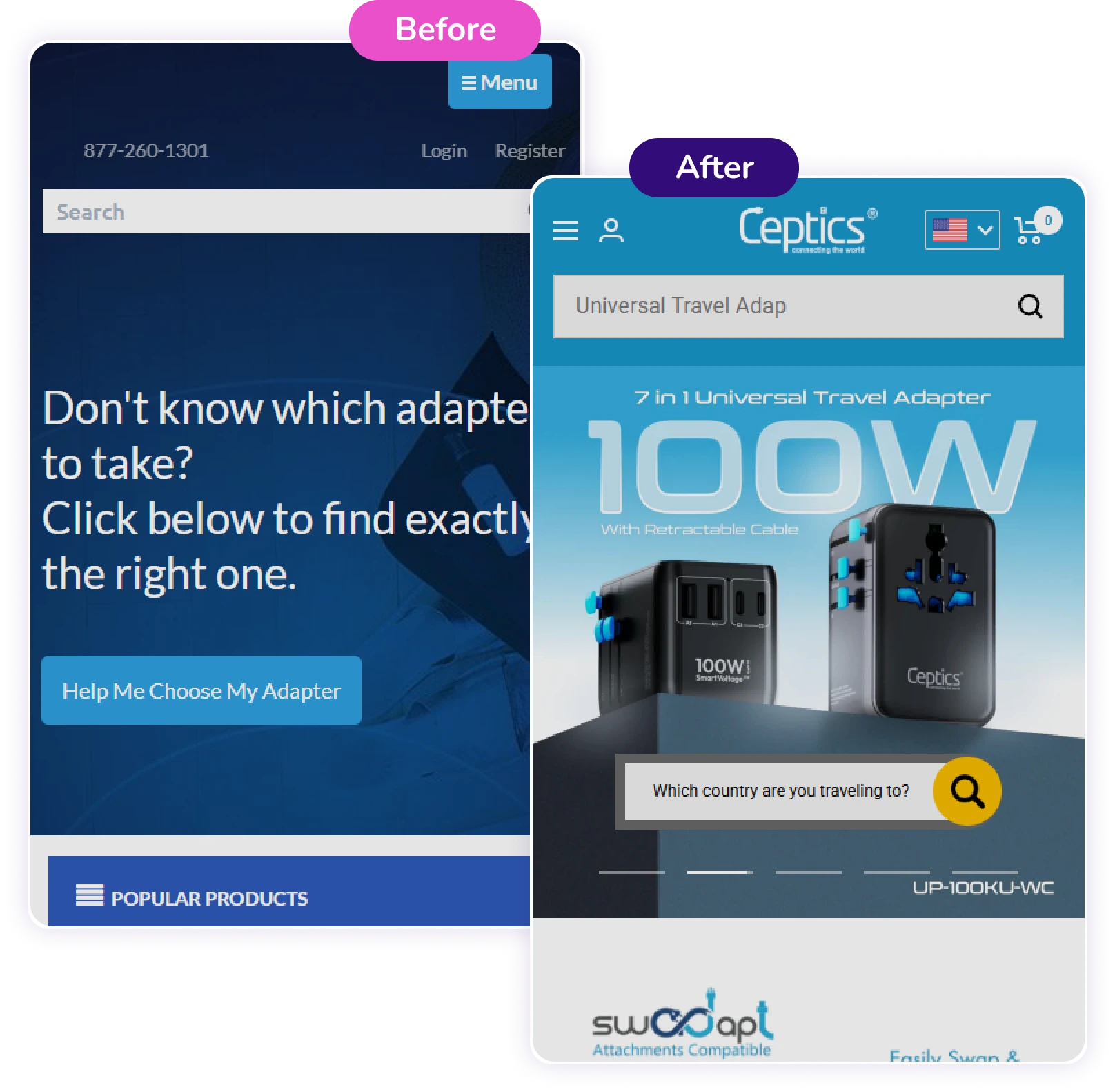
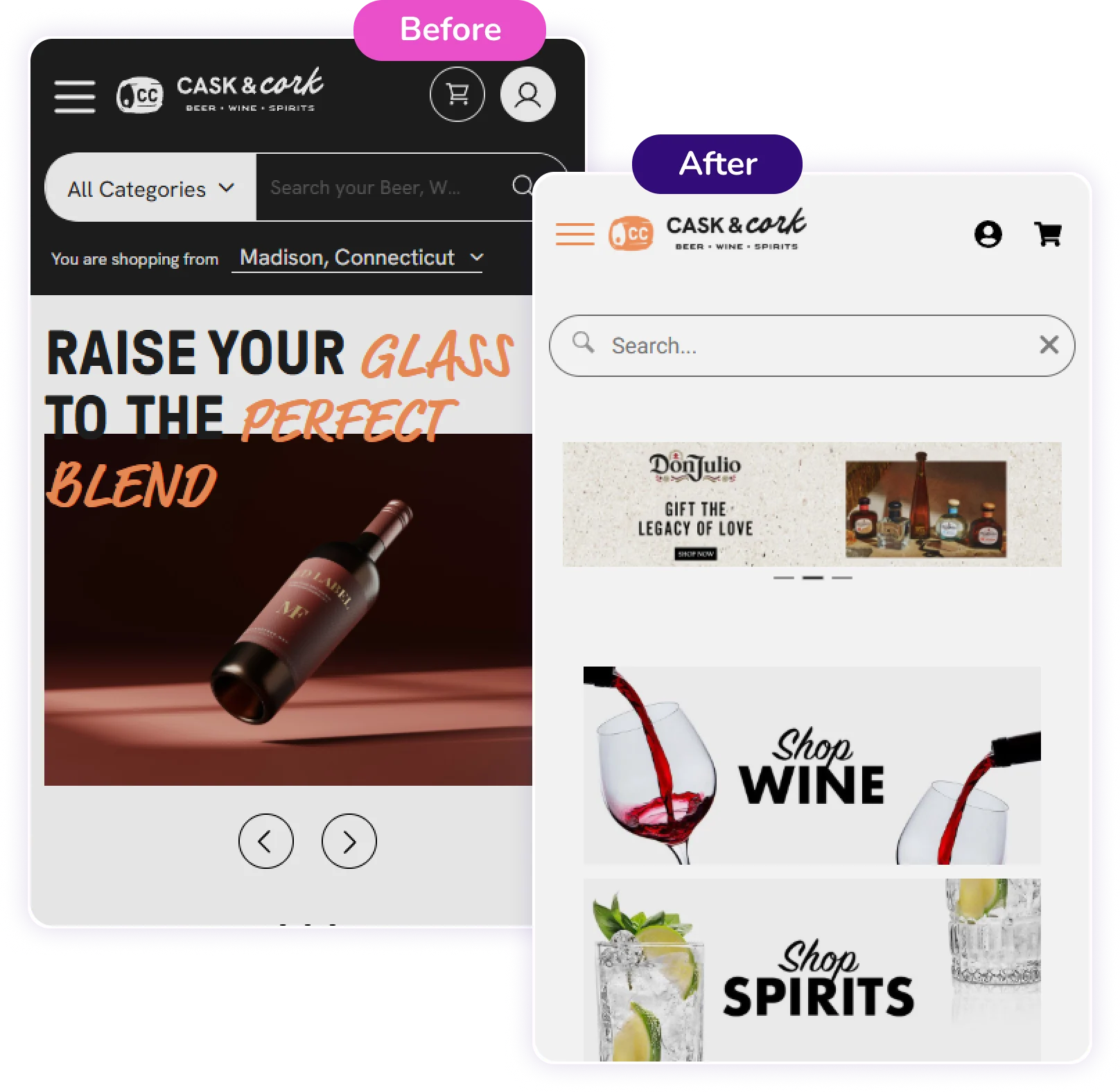
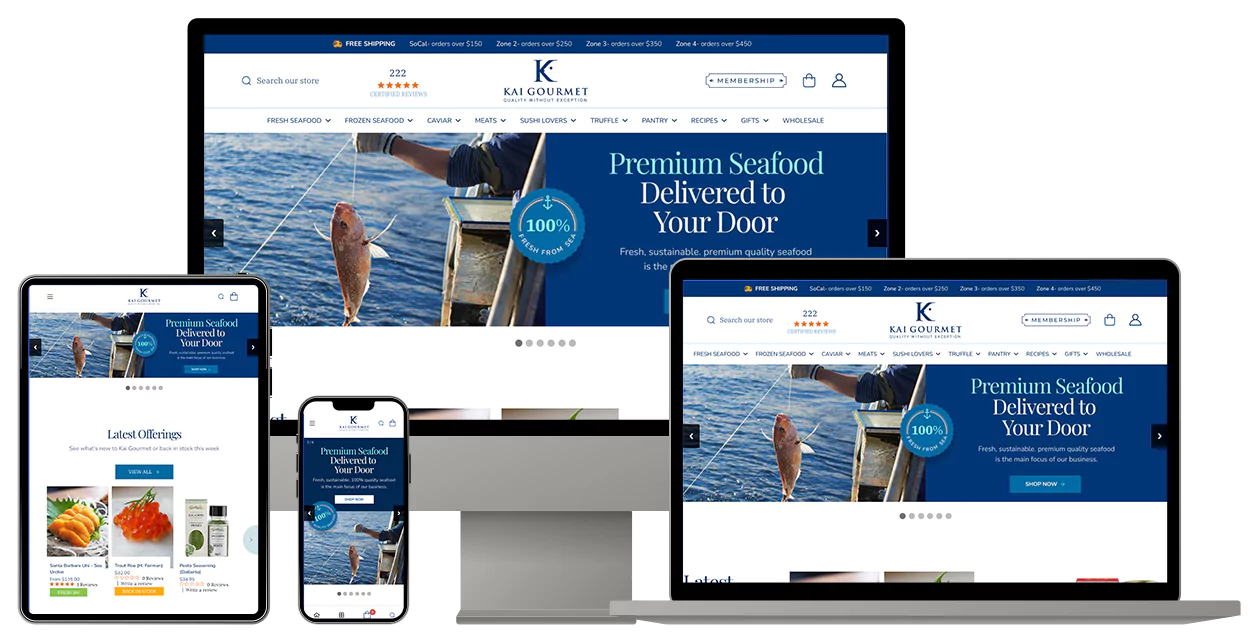
See how our Shopify audit services identified hidden revenue gaps, technical SEO issues, and checkout friction. From traffic drop recovery to conversion growth, these stores turned audits into measurable profit.
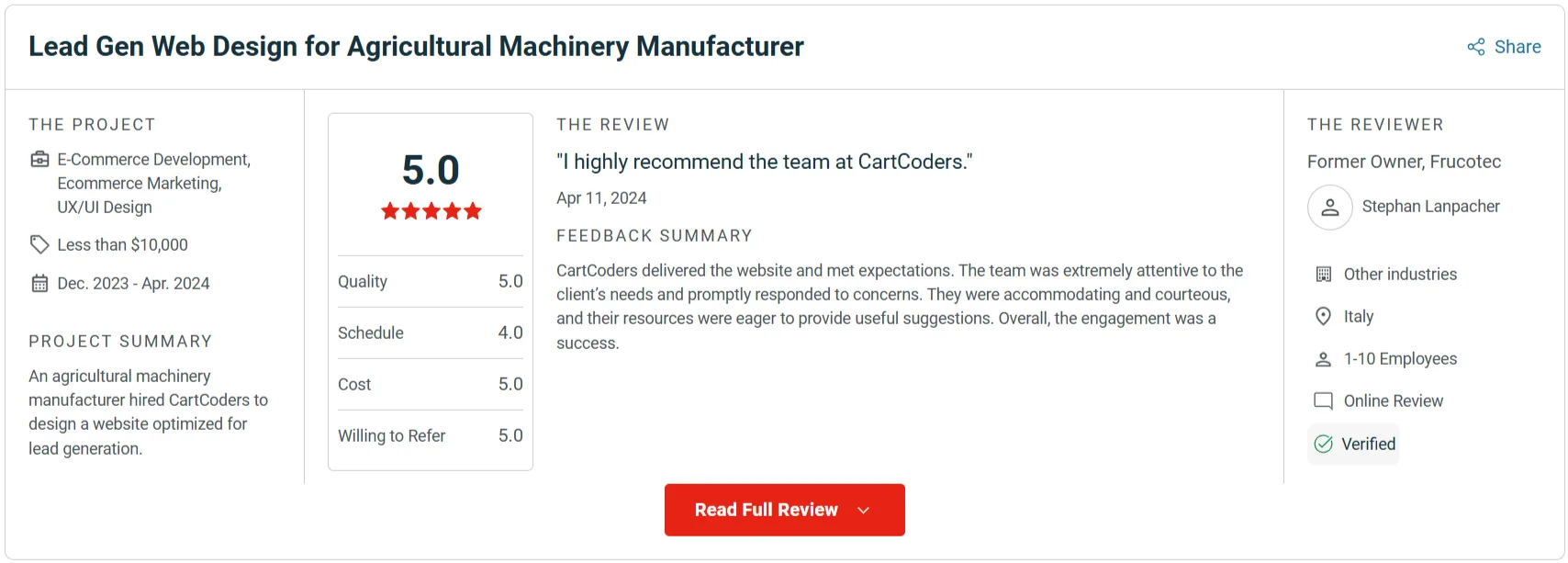
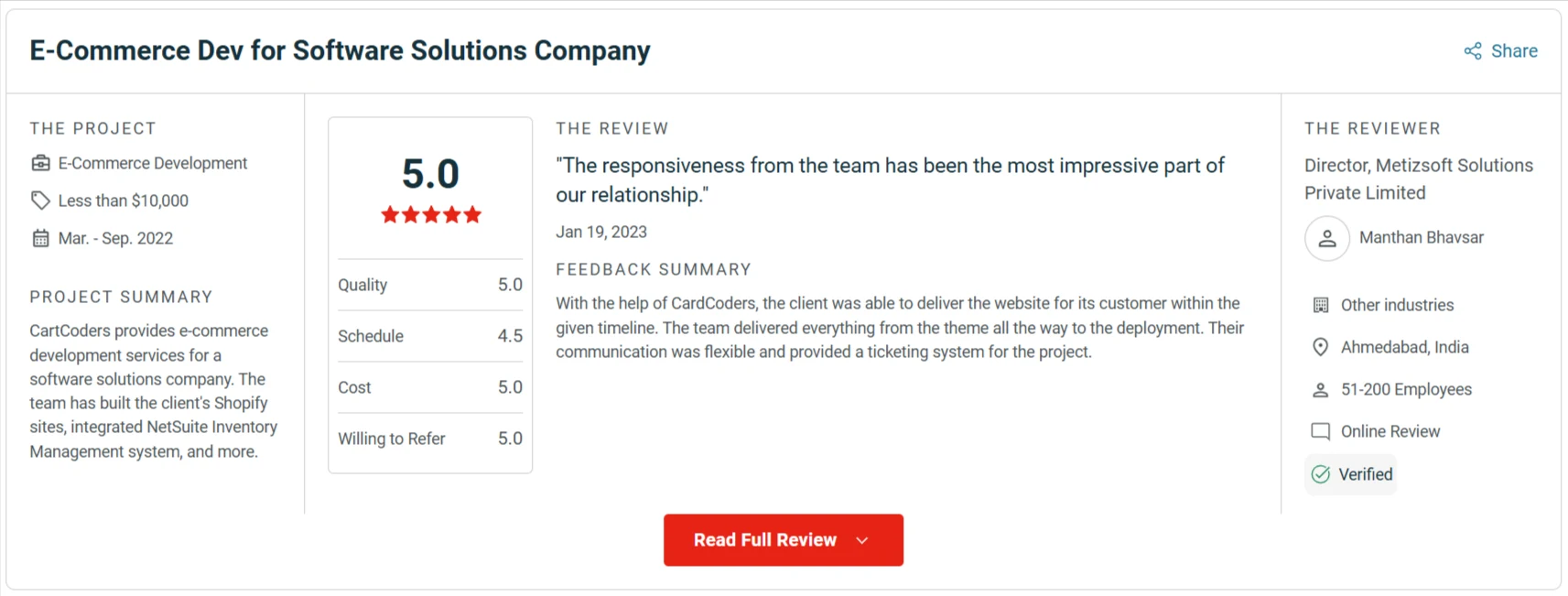
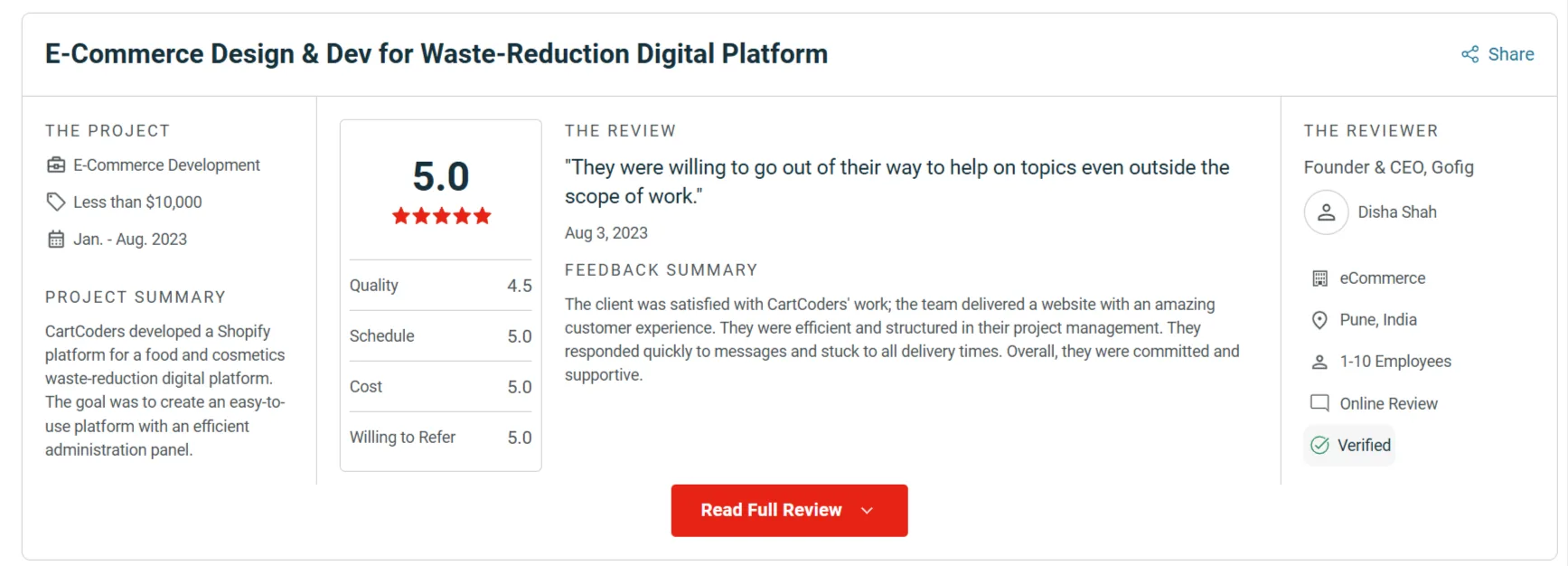
Independent Clutch ratings reflect our structured, technical, and results-focused approach to Shopify Website Audits.
A Shopify Website Audit must move from detection to structured correction. This framework breaks down technical risks, SEO gaps, and performance weaknesses into prioritized action steps.
A Shopify website audit is a detailed review of your online store’s technical setup, user experience, SEO, content, performance, and conversion strategies. The goal is to uncover issues and recommend improvements for visitor engagement and sales performance.
We evaluate core elements like site speed, core web vitals, mobile responsiveness, SEO metadata, navigation structure, page design, installed apps, and content clarity to find what may be limiting your store’s effectiveness.
By pinpointing slow-loading pages, obstructive apps, or SEO deficiencies, an audit helps align your store for better traffic, reduced bounce rates, and improved conversions—supported by data and strategic insights.
Our audit looks at site speed, code efficiency, mobile loading behavior, image optimization, and app performance impact—identifying technical bottlenecks that may distort customer experience or traffic growth.
We analyze navigation ease, content clarity, visual layout, checkout flow, and mobile responsiveness. Testing includes feedback through heatmaps, user paths, and usability checks for real insight into visitor behavior.
Depending on store size, complexity, and audit depth, the process takes anywhere from a few days to a couple of weeks. After reviewing your setup, we share expectations before starting.
The service is ideal for stores experiencing slow loading, low conversions, poor search ranking, app bloat, or declining traffic. The audit helps diagnose root causes and guides data-informed fixes.
We examine your store’s current metrics—including speed, traffic, UX, SEO, and conversion flow—and create a prioritized action plan to address what’s blocking growth and customer satisfaction.
We deliver a clear, documented audit showing technical findings, SEO issues, content gaps, and usability friction, along with practical steps and resource estimates to correct them.
Yes. Beyond identifying areas to improve, CartCoders can assist with remediation—such as site speed fixes, SEO improvements, UX refinements, and app configuration—to improve your store’s effectiveness.
Yes. Many clients schedule follow-up reviews after implementing recommendations. CartCoders can compare before-and-after metrics to confirm improvement and adapt future strategies.
Reach us now to get result-oriented, feature-rich, and high-performing Shopify development services. Let’s get together to craft your idea!
Projects delivered in 15+ industries.
95% retention rate, building lasting partnerships.
Serving clients across 25+ countries.
60+ pros | 10+ years of experience.